

{ "options": [ "5 Key Differences Between DTF and Screen Printing", "The Ultimate Guide to DTF and Screen Printing", "Why DTF Printing is the Best Choice for Quality" ] }
DTF Printing Vs Screen Printing: Which Is Better For Your Custom Shirts?
![[HERO] DTF Printing Vs Screen Printing: Which Is Better For Your Custom Shirts?](https://cdn.marblism.com/r0u9i0fxOgT.webp)
So you want custom shirts. Maybe you're launching a brand, outfitting your team, or just want something unique that nobody else has. Either way, you've probably come across two popular printing methods: DTF printing and screen printing.
But which one should you actually choose?
Here's the truth: neither method is universally better. It really comes down to what you need. Order size, design complexity, budget, and even how you want the print to feel on the fabric all play a role.
Let's break it down so you can make the right call for your custom shirts.
What Is DTF Printing?
DTF stands for Direct-to-Film printing. It's a newer method that's been gaining serious traction in the custom apparel world.
Here's how it works: a special printer creates your design on a thin film. Then, that film gets transferred onto your fabric using a heat press. The result? A smooth, vibrant print that bonds tightly to the material.
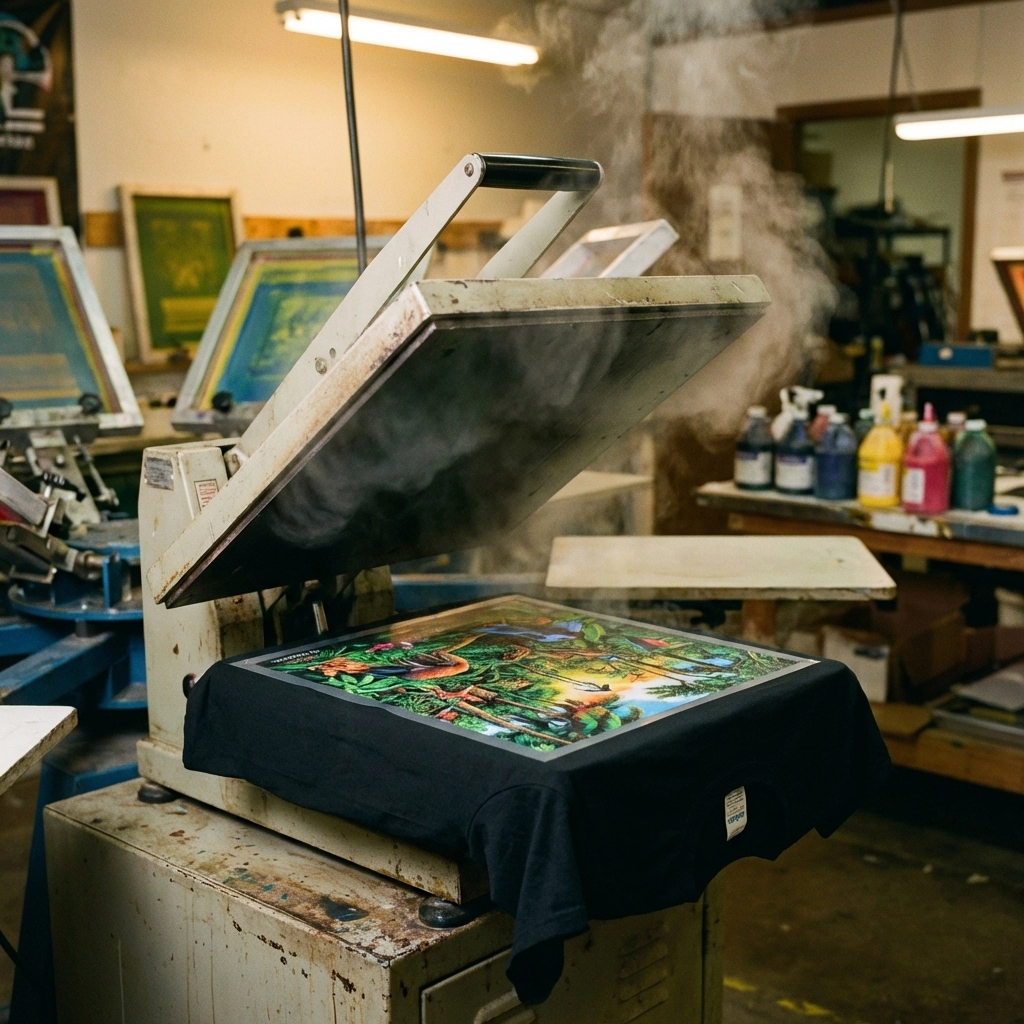
One of the biggest perks of DTF is its flexibility. It works on pretty much any fabric: cotton, polyester, blends, even leather and textured materials. Dark fabrics? No problem. Light fabrics? Also good.
DTF is especially great for designs with lots of colors, fine details, gradients, or photorealistic images. If your design has intricate elements that would be a nightmare to separate into individual screens, DTF handles it like a champ.
What Is Screen Printing?
Screen printing is the OG of custom apparel. It's been around for decades and is still the go-to method for large-scale production.
The process involves pushing ink directly through mesh screens onto the fabric. Each color in your design needs its own screen, which means setup can get complicated (and expensive) for multi-color designs.
But here's the thing: screen printing produces bold, vibrant colors with a slightly raised, textured feel. That classic look and feel you see on vintage band tees? That's screen printing.
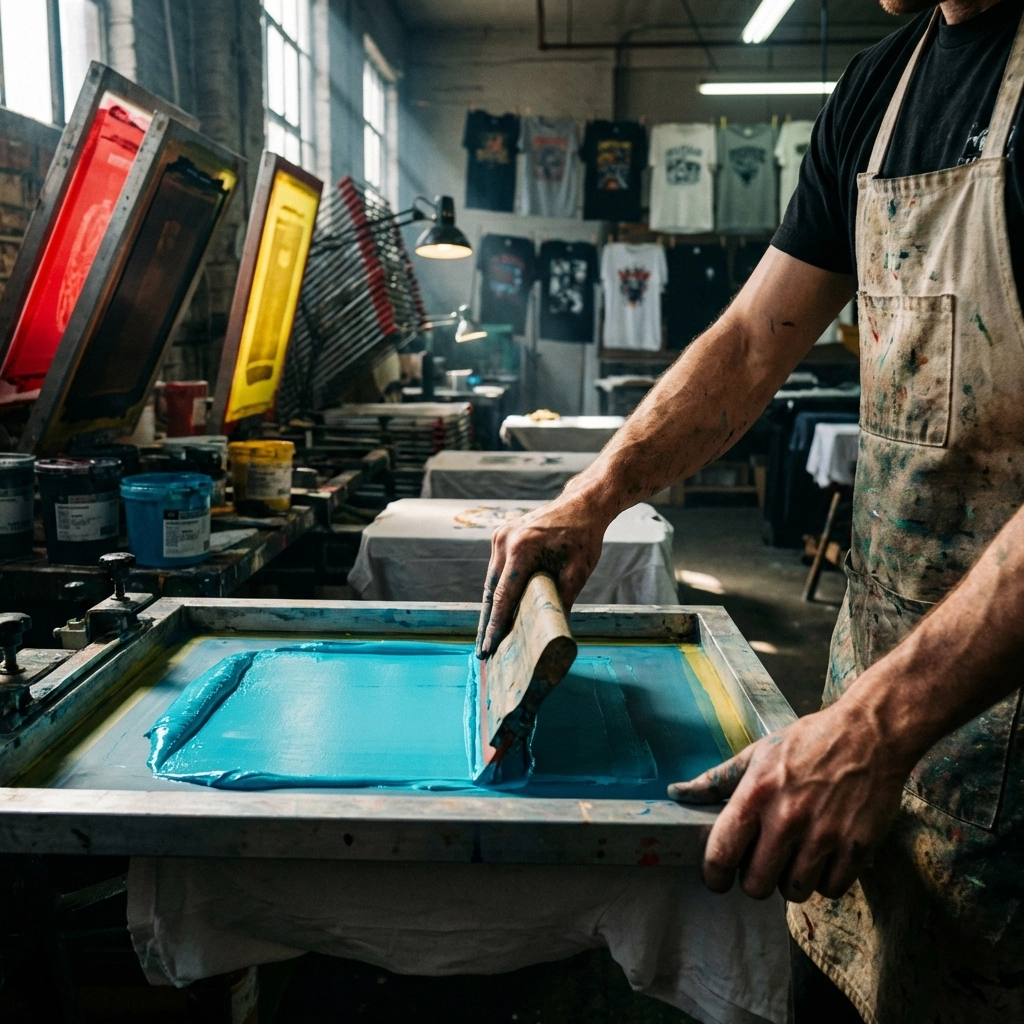
Screen printing really shines when you're working with simpler designs and large quantities. Once those screens are set up, you can crank out hundreds of shirts quickly and cost-effectively.
The Key Differences
Let's get into the nitty-gritty. Here's how DTF and screen printing stack up against each other.
Print Quality
Both methods produce high-quality results, but they excel in different areas.
DTF is the winner for intricate details and photorealistic images. Fine lines, smooth gradients, unlimited colors: DTF handles it all. The print sits smoothly on the fabric, giving it a softer feel.
Screen printing delivers bold, punchy colors with that iconic textured finish. If you want your design to pop with vibrant solids and a classic apparel look, screen printing is hard to beat.
Setup and Production Speed
This is where things get interesting.
DTF has minimal setup. You design it, print the film, heat press it onto the shirt. Done. There's no need to create separate screens for each color, which means you can start producing immediately.
Screen printing requires serious prep work. Each color needs its own screen, and every screen has to be perfectly aligned. For a simple one-color design, that's not a big deal. For a complex multi-color design? It's time-consuming and adds to your costs.
Once setup is complete, both methods can achieve similar production speeds: around 500 shirts per hour. But DTF gets there right away, while screen printing needs that upfront investment of time and effort.
Cost
Here's the deal with pricing:
DTF is more cost-effective for smaller orders and custom runs. Since there's no screen setup required, you're not paying extra for that initial investment. Need just 10 shirts? No problem. Need 50 different designs? Still no problem.
Screen printing has higher upfront costs due to screen creation. But here's the flip side: once you're producing at scale, the per-unit cost drops significantly. If you're ordering 500+ shirts with the same design, screen printing will likely save you money.
Durability
Both methods produce durable prints, but there are some differences.
Screen printing is incredibly durable. The ink bonds with the fabric fibers and can last through endless washes without fading. It's the gold standard for longevity.
DTF prints also hold up well. They bond tightly to the fabric and resist cracking. However, some people notice a slight change in texture over time with repeated washing. It's not a dealbreaker, but it's worth knowing.
Fabric Compatibility
DTF wins here. It works on cotton, polyester, blends, leather, and even textured fabrics. It's especially great for dark fabrics since the film creates a base layer that makes colors pop.
Screen printing works best on cotton and cotton blends. While it can be done on other materials, the results aren't always as consistent.
When Should You Choose DTF Printing?
DTF is your best bet if:
- You need small quantities (even just one shirt)
- Your design has lots of colors, gradients, or fine details
- You want photorealistic images or complex graphics
- You're printing on dark fabrics
- You need flexibility to print different designs without extra setup costs
- You're starting a small business or side hustle and want to keep startup costs low
At Hustl3r lif3 Appar3l, we use DTF printing for customers who want maximum detail and flexibility without minimum order requirements.
When Should You Choose Screen Printing?
Screen printing makes more sense if:
- You're ordering large quantities (think 100+ shirts)
- Your design is relatively simple with fewer colors
- You want that classic, textured print feel
- Maximum durability is your top priority
- You're doing repeat orders of the same design
For big events, corporate orders, or merchandise runs where you need hundreds of the same shirt, screen printing's efficiency at scale is tough to beat.
Quick Comparison Chart
|
Factor |
DTF Printing |
Screen Printing |
||
|---|---|---|---|---|
|
Best for order size |
Small runs, one-offs |
Large batches (100+) |
||
|
Design complexity |
Complex, multi-color, photorealistic |
Bold, simple designs |
||
|
Setup cost |
Low |
High |
||
|
Per-unit cost at scale |
Higher |
Lower |
||
|
Fabric types |
Almost any fabric |
Cotton and cotton blends |
||
|
Print feel |
Smooth, soft |
Textured, raised |
||
|
Durability |
Very good |
Excellent |
||
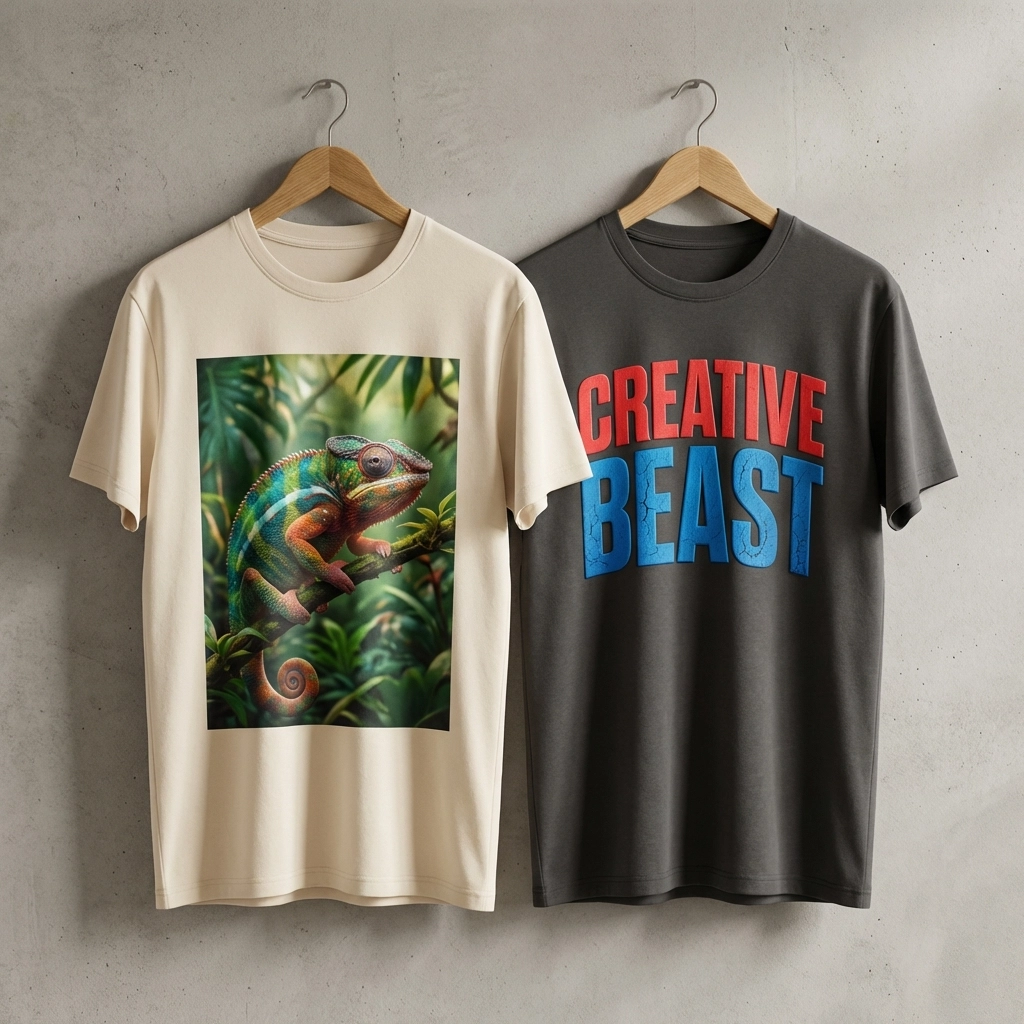
So Which One Is Better?
There's no single right answer. It depends on your project.
Choose DTF if you value flexibility, need smaller quantities, or have detailed designs that would be impractical for screen printing. It's also the smarter choice if you're testing designs or building a business where customization is key.
Choose screen printing if you're handling large production runs with simpler designs and want that classic apparel look and feel. The upfront investment pays off when you're producing at scale.
The good news? You don't have to figure this out alone. Whether you need custom shirts for your brand, your team, or just yourself, we're here to help you pick the right method for your project.
Ready to bring your custom shirt ideas to life? Hit us up at Hustl3r lif3 Appar3l and let's make it happen.
